

- Random AI Programming Concepts Double Your Technical Debt
- The Trap of Illusory Productivity in the Age of Smart Automation
- The Impact of AI Programming Concepts on Technical Debt
- Analyzing the Gap Between Prompts and Engineering Principles
- Why Do We Prefer Over-Engineering to Structural Repair?
- When is Automation a Necessity, Not an Engineering Luxury?
- Strategies for Redirecting AI Towards Simplicity
- How I Reduced a React Project Size by 40% Without Extra Tools
- Returning to Engineering Fundamentals
Random AI Programming Concepts Double Your Technical Debt
The Thursday night before delivering an inventory management platform to a client in Casablanca, I faced a critical juncture. I was reviewing the project’s final code. My screen filled with dozens of lines for a complex synchronization script.
A developer on my team had spent two days building this script. The goal was to avoid code duplication across various configuration files. The solution seemed very clever at first glance. But it was entirely unnecessary programming complexity. We simply needed to consolidate settings into one central file. Instead, we built an advanced technical bridge over a superficial architectural problem.
I realized then the trap we had fallen into. We were using GitHub Copilot to write quick solutions. These solutions addressed problems that should never have existed. I stopped work immediately and deleted the script entirely. I started from scratch, consolidating the settings into a central module. In twenty minutes, we eliminated one hundred and fifty lines of extraneous code. We delivered the project, and it ran with complete stability, no errors.
This is why I founded the Hcouch Digital blog years ago. Arab developers deserve to learn how to build a solid technical foundation. Architectural errors should not be masked by complex automation.
The Trap of Illusory Productivity in the Age of Smart Automation

In today’s technical landscape, we often confuse doing more with doing better. We use the power of automation tools to hide deep structural issues in system design.
Writing extra code to solve an organizational problem is over-engineering. It’s like using a race car to plow a field. The tool is powerful, but the application is entirely wrong.
1.1 The Difference Between Solving a Problem and Automating Its Symptoms
A professional developer always seeks the structural root of a problem. A developer entirely reliant on tools merely addresses surface-level results. I encountered this in a recent financial application project. The developer wrote fifty lines of automation to sync variables. It would have been better to move just five lines to a shared module.
When we automate symptoms, we multiply chaos instead of reducing it. Automation acts as a force multiplier. If you multiply a chaotic system, you get faster, more complex chaos. We must always ask ourselves about the original cause of the problem.
1.2 The DRY Principle vs. Technical Bridge Solutions
The DRY (Don’t Repeat Yourself) principle is fundamental to clean code design. Its absence creates fertile ground for errors and repetition. Instead of applying this principle, we build complex technical bridges. We use AI tools to connect duplicated parts that should have been merged.
This approach creates an illusion of productivity and quick achievement. The generated code works and executes requirements precisely. But it adds layers of unjustified complexity to the project. This confusion between productivity and complexity leads us directly to understanding how hidden technical debt accumulates.
The Impact of AI Programming Concepts on Technical Debt
Technical debt was very costly in the recent past. Refactoring code required hours of deep concentration. The team had to manually trace dependencies and test every change. This high cost pushed teams to avoid debt from the outset.
2.1 The Paradox of Cheap Debt and Ease of Deferral
Today, the cost of refactoring has dropped dramatically. You can feed messy code to a large language model. It will clean and organize it in mere seconds. This ease has created a dangerous paradox in the workplace. Developers defer fixes because they know AI will solve them later.
Instead of addressing the root cause, teams build temporary solutions. It has become a phenomenon where over-engineering becomes a feature thanks to AI. The developer doesn’t ask how to fix the architecture. Instead, they ask the tool how to automate this technical annoyance.
2.2 Accumulating Comprehension Debt
Total reliance on generated code creates a new kind of debt. I call this “comprehension debt” or internal system understanding. The system works efficiently, but the team doesn’t grasp its intricate details. Complexity grows faster than human minds can comprehend.
In an e-commerce project, we faced this exact issue. We used AI to generate a complex product discount system. The code worked perfectly initially. But when an error occurred, the team couldn’t trace the internal logic. Accumulating this debt forces us to re-evaluate how we direct our smart tools.
Analyzing the Gap Between Prompts and Engineering Principles
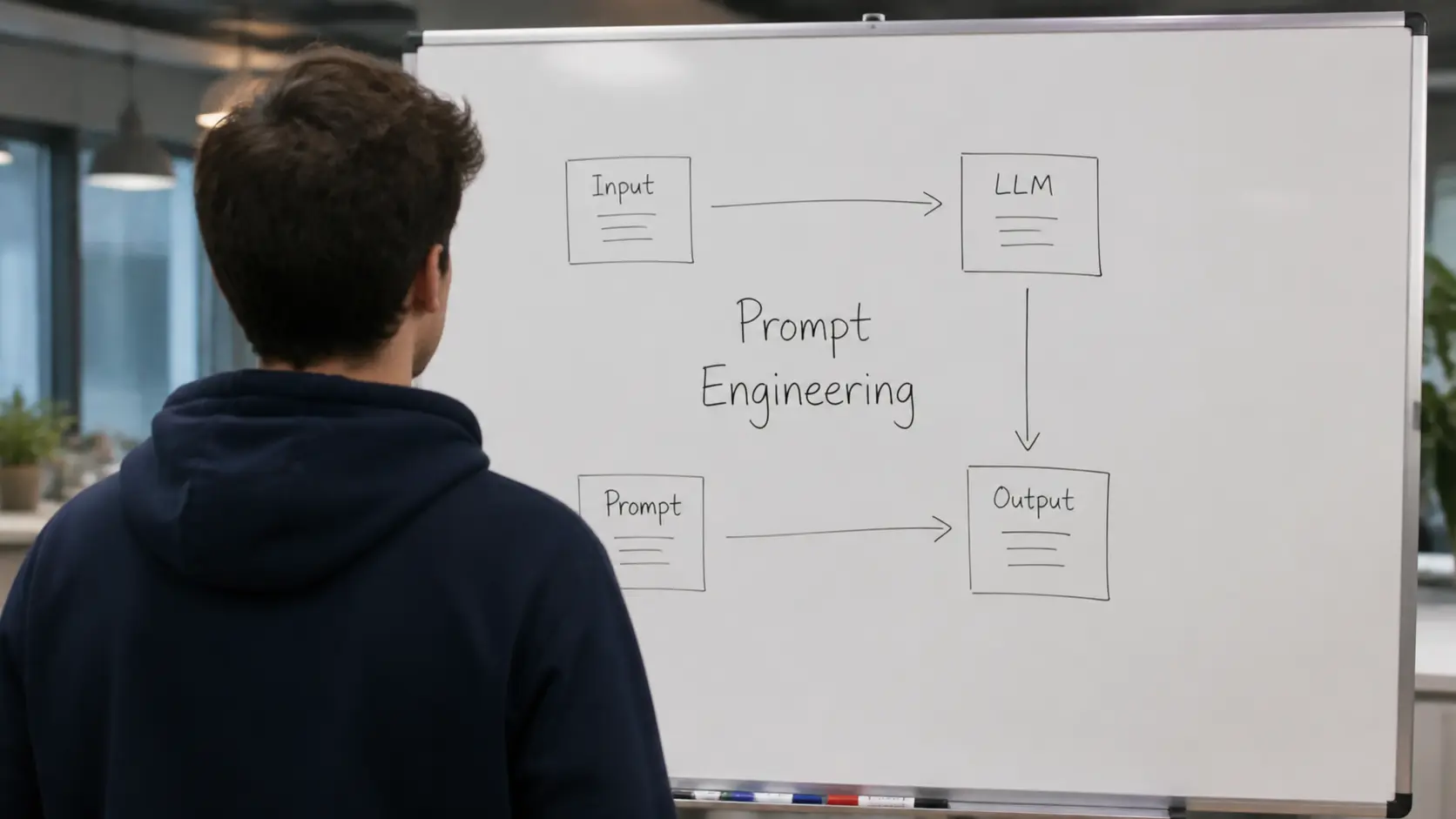
The core of the problem lies in how we frame technical challenges. To solve a programming problem, a developer must first understand its nature. If a developer doesn’t grasp the value of a “single source of truth,” they will misdirect the tool. They will ask AI to maintain the wrong approach instead of fixing it.
3.1 The Danger of Local Optimization at the Expense of the Whole System
AI systems are very adept at optimizing direct prompts. But they operate within a very narrow local scope. These tools lack comprehensive context of the entire system architecture. Therefore, they produce solutions that are locally correct but structurally detrimental.
This reminds me of attempts to extract data with AI as an alternative to traditional tools. We asked the tool to process unstructured data locally. The result was massive resource consumption instead of fixing the API. We optimized a small function but overloaded the entire server.
3.2 Crafting Prompts from an Architectural Perspective, Not a Programmer’s
Directing language models requires an architect’s mindset first. We should not ask for code to solve a superficial problem. Instead, we should ask for structural suggestions that eliminate the problem at its root. A successful prompt focuses on reducing complexity, not increasing lines of code.
In an HR management project, we changed our prompting approach. Instead of asking, “Write a function to sync employee data.” We asked, “How do we design a database that prevents duplicate employee data?” The result was a clean design that eliminated the need for any synchronization code. Despite the clarity of these principles, a strange tendency to choose the most complex solutions persists.
Why Do We Prefer Over-Engineering to Structural Repair?
This recurring pattern in software engineering is not accidental. Psychological and institutional drivers push us toward over-complexity. Simple solutions often don’t appear impressive or sophisticated enough. Building complex tools, however, provides a deep sense of technical accomplishment.
4.1 The Allure of Modern Tools in the Workplace
Smart automation always seems like genuine progress. Building an AI agent to manage settings appears to be significant work. Comparing this to a simple refactor makes the repair seem dull. Developers are drawn to experimenting with the latest technologies in their daily projects.
At a digital marketing agency I worked with, they designed a complex system. They built an AI bot to track dashboard changes. They could have simply used a standard permissions system readily available. The desire to use new technology blinded them to the simple solution.
4.2 The Reward System and Appearing Innovative
Companies often reward developers who deliver visible features. No one applauds someone who deletes one hundred lines of faulty code. Improving internal design quality doesn’t appear on performance reports. This encourages teams to build new tools instead of simplifying.
Short-term optimization dominates rapid development decisions. It’s easier to address symptoms with a ready, fast tool. Returning to foundational decisions requires time and courage to admit mistakes. However, we must not forget that there are scenarios where this automation is essential.
When is Automation a Necessity, Not an Engineering Luxury?

Not every synchronization script indicates a design flaw. We must clearly distinguish between inherent complexity and added complexity. Some projects impose engineering constraints that cannot be simply bypassed. Here, AI tools become an utmost necessity, not a luxury.
5.1 Handling Distributed Systems and Inevitable Constraints
Distributed systems require an inevitable level of duplication. When deploying across multiple environments, data synchronization is unavoidable. Microservices infrastructure demands constant coordination between servers. In these cases, automation addresses genuine system constraints.
I worked on setting up Kubernetes servers for a logistics company. We needed to synchronize encryption keys across several geographically separate servers. Here, we used smart scripts to monitor and update keys automatically. This wasn’t an architectural flaw but a natural response to infrastructure complexity.
5.2 Testing the ‘Single Source of Truth’ Before Programming
Before writing any automation code, apply a very simple test. Ask yourself: Can this data be consolidated in one place? If the answer is yes, you face a structural design problem. Do not write new code; reorganize existing code.
If the answer is no due to security or geographical constraints, then you can employ AI to build a secure synchronization bridge. This quick test saves hundreds of hours of future maintenance. Identifying these cases leads us to adopt strategies that make AI a partner in simplification.
Strategies for Redirecting AI Towards Simplicity
A developer’s primary goal is not to write smarter code. The goal is to solve problems with the least possible complexity. We can transform AI from a complexity tool into a simplification partner. This requires a change in how we communicate with these models.
6.1 Using AI to Detect Over-Complexity
Instead of asking for code generation, request a review of existing code. Instruct the tool to find parts violating clean design principles. Ask it to identify redundant logic and suggest ways to consolidate it centrally. AI is excellent at detecting hidden repetitive patterns.
In one review, I submitted a Pull Request to ChatGPT. I specifically asked it to look for violations of the Don’t Repeat Yourself principle. The tool extracted three different functions performing the exact same task. We merged them immediately before approving the update in the final release.
6.2 Prompt Engineering for Reduced Lines and Dependencies
When new code is needed, stipulate simplicity in your prompts. Ask for solutions that rely on a minimal number of external libraries. Use terms like “Minimalist Solution” in your prompts to language models. This limits AI’s tendency to show off its programming prowess.
Always stipulate that the solution must be readable by a junior developer. If the generated code is too complex, ask for immediate simplification. Less code means fewer errors and easier future maintenance. To illustrate these strategies, I will share how I recently applied them in a complex project.
How I Reduced a React Project Size by 40% Without Extra Tools
I inherited a user interface project built with the React framework from another team. The project was very slow and full of auto-generated helper functions. Every simple function had its own smart script. The code worked, but maintenance became a daily nightmare for the team.
I decided to use Claude 3.5 Sonnet in a completely different way. I didn’t ask it to write a single line of new code. Instead, I asked it to map out the state management dependencies. I told it: “Identify the redundant logic paths that manage the same data.” The result was shocking. We found massive duplication in data fetching and storage.
We began deleting excess code based on this analysis. We didn’t add any new tools or complex external libraries. We simply consolidated the data source into main components. The result was a complete 40% reduction in code size. The application became much faster, and the team regained its ability to understand the project.
Returning to Engineering Fundamentals
AI is a powerful tool for exploring new and complex technical frontiers. It should be used to optimize difficult algorithms and handle inevitable routine tasks. But it should not become a virtual layer patching weak foundations. If you are only upgrading your tools to cope with your project’s chaos, stop.
The time has come to reshape the project environment from within. Stop celebrating the automation of tasks that should have been eliminated in the first place. Open the last project you coded with AI assistance this week. Look for synchronization files or duplicate code in your project. How many lines of code can you delete now by simply consolidating the data source?
Discover more from أشكوش ديجيتال
Subscribe to get the latest posts sent to your email.
![7 فروق بين مقابلات الذكاء الاصطناعي والبشر [دليل التوظيف]](https://hcouchd.com/wp-content/uploads/2026/10/file_00000000edc481f694cecfb5a3f731e3-1024x576.webp)
![أتمتة المقابلات التقنية عبر الذكاء الاصطناعي [دليل عملي]](https://hcouchd.com/wp-content/uploads/2026/09/file_000000004e2881fd80ca5d541ab0de2b-1024x576.webp)
![تصميم أنظمة الذكاء الاصطناعي للتجارة بتدخل بشري [مع أمثلة]](https://hcouchd.com/wp-content/uploads/2026/09/file_00000000dfdc8230b71e09206ed024dc-1024x576.webp)