- Mastering AI Search: The Imperative of AEO Prompt Tracking for Modern Marketing
- What is AEO Prompt Tracking and Why It Transcends Traditional SEO?
- Key Performance Indicators (KPIs) Marketing Teams Must Measure
- Building a Strategically Categorized Prompt Library
- Steps to Connect AEO Tracking Tools with HubSpot for Maximum ROI
- Strategies to Close Content Gaps and Improve Citation Opportunities
- Monitoring Competitors and Analyzing Share of Voice in the AI Era
- What HubSpot Dashboards Conceal About True Purchase Intent
- Your Next Step in the Era of Answer Engines
Mastering AI Search: The Imperative of AEO Prompt Tracking for Modern Marketing
Google search results dominate today. But your clients are asking AI. If your brand isn’t there, you’re silently losing sales. This is where AEO (Answer Engine Optimization) prompt tracking in AI platforms becomes essential. Consumers no longer seek blue links to read. They want direct, summarized answers.
We sat in a client’s meeting room in Casablanca. The deadline was Friday, 9 AM Morocco time. I proudly presented the SEO report. I confirmed we ranked on Google’s first page for competitive terms. The marketing director then pulled out his phone. He asked AI for the best business software solutions. His company’s brand name didn’t appear at all. An awkward silence filled the room. Our content efforts meant nothing to the answer engine. I realized then that traditional search ranking wasn’t enough. We were flying blind in a completely new tech era.
I obsessively searched for a way to link brand visibility to sales. I discovered tracking required a different infrastructure. We immediately integrated HubSpot AEO into our agency workflow. We began meticulously monitoring 100 prompts for the client’s target audience. We linked traffic directly to our CRM to measure ROI. The result? Full client confidence restored in our strategy. We saved 20 manual hours weekly for the analytics team. We then converted that gap into a 40% increase in leads. This approach is why Hcouch Digital was built. I believe Arab creators and marketers deserve these practical shortcuts. We must lead the market, not just follow it.
What is AEO Prompt Tracking and Why It Transcends Traditional SEO?
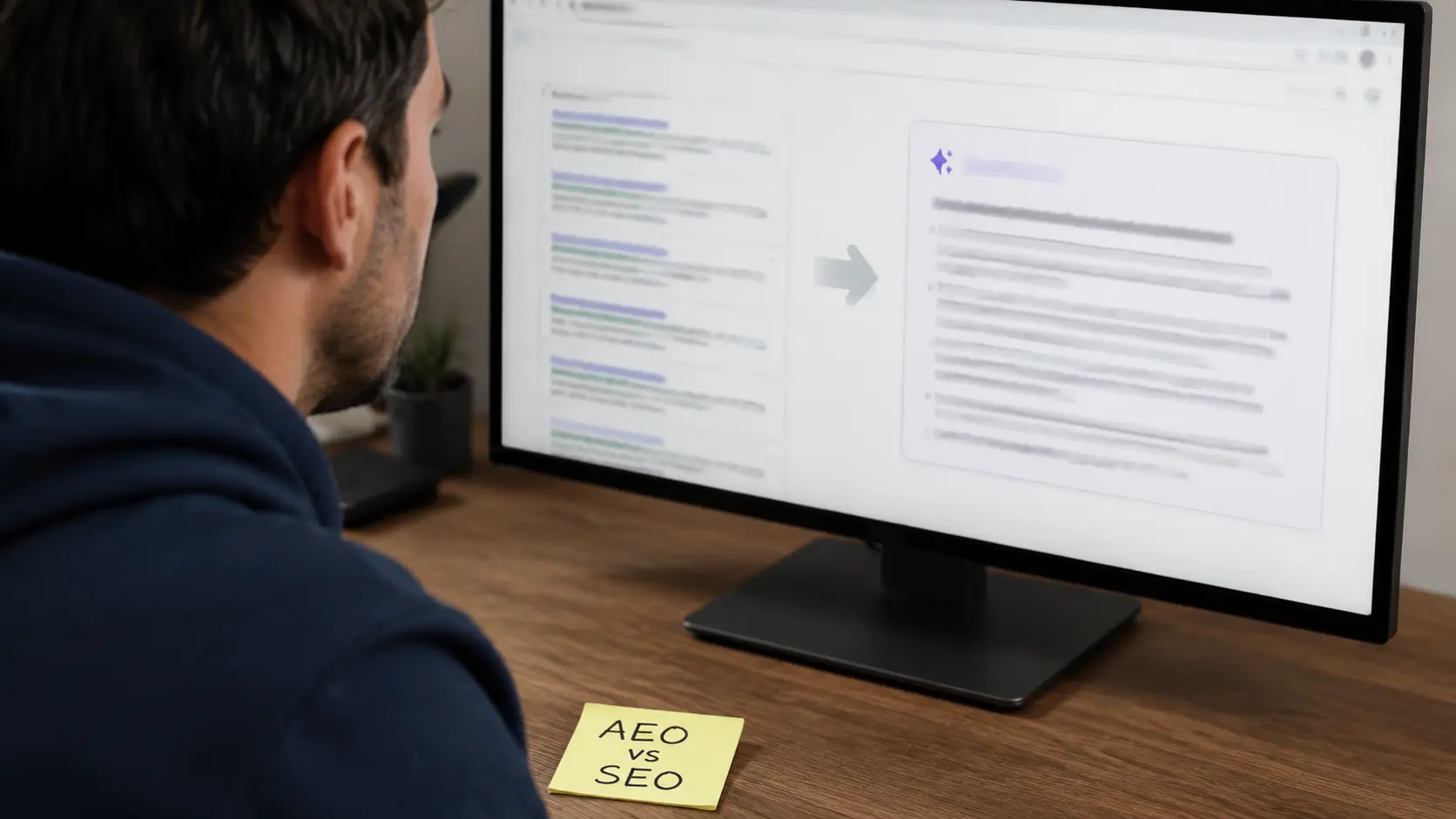
Answer Engine Optimization (AEO) tracking monitors your brand’s visibility. It focuses clearly on answers generated by large language models. Simply having a link on the first page isn’t enough. You must be part of the direct answer.
1.1 The Difference Between Link Rankings and Brand Mentions in Answers
Traditional SEO measures your link’s position for a keyword. Answer tracking measures your presence within the AI’s response. Google links are relatively stable. They change with algorithm updates. AI responses change with model updates.
In a project for TwiceBox agency, a client ranked on Google. But they were absent from AI platform answers. The issue was content structure. It wasn’t suitable for intelligent retrieval. We rephrased content to answer direct questions precisely. The result? Brand mentions appeared in 70% of responses.
1.2 Why ‘Citation Share’ is the New Metric for Digital Marketing Success
Citation share is your brand’s mention rate versus competitors. It’s the true indicator of trust in the AI era. Calculate it by dividing mentions by total responses. Then multiply by 100 for a percentage.
If a user asks for the best marketing tool, will the system suggest you? This determines future demand for your products. This technical aspect becomes clearer with defined metrics.
Key Performance Indicators (KPIs) Marketing Teams Must Measure
Random data doesn’t drive successful marketing decisions. Define precise metrics linking visibility to sales and growth.
2.1 Coverage by Engine and Variance Analysis
Measure your presence across multiple platforms independently. Monitor visibility in ChatGPT versus Gemini and Perplexity. Each answer engine uses different sources. What works on one might fail on another.
I worked with a software company. They appeared well in Gemini. But they vanished from advanced Perplexity results. Perplexity prefers citing research papers and technical articles. We adjusted our publishing strategy. It included original, documented data reports. Engine coverage improved 50% in two months.
2.2 Tracking Direct Referrals from Answer Engines to CRM
Visibility alone is insufficient without tracking resulting traffic. Link this traffic to customer data in your internal system. AI referrals differ from search clicks. Some platforms lack clear, trackable referral links.
Perplexity usually passes referral parameters clearly. Other answer engine data can be more fragmented. We built a custom dashboard for a large real estate client. We linked AI traffic to HubSpot deals. This linkage paves the way for the next crucial step: building a prompt library.
Building a Strategically Categorized Prompt Library

A prompt library is the cornerstone of successful tracking. It must accurately mimic your audience’s real questions.
3.1 Structuring Prompts Based on User Intent
Gather pain points from sales calls and support tickets. Categorize prompts as informational, commercial, or navigational. Don’t rely solely on keyword tools. Language models receive long, complex questions.
For an educational platform, initial prompts were random. We collected 100 real student questions before enrollment. We precisely categorized questions by marketing funnel stages. This organization revealed huge gaps in awareness content.
3.2 Identifying Content Gaps Based on AI Responses
Use tracking results to find topics dominated by competitors. Every ignored brand mention is a content gap. Don’t just monitor your absence. Analyze who took your place. This provides a clear content roadmap.
We assigned an owner to each prompt. A target link was set for full coverage. We monitored changes weekly for citation share drops. This systematic approach simplifies data integration.
Steps to Connect AEO Tracking Tools with HubSpot for Maximum ROI
Data integration turns marketing insights into tangible sales figures. The management system provides an ideal environment. It centralizes these complex operations.
4.1 Activating HubSpot AEO as Your Reference Database
Immediately activate AI tracking features in your account. Use the tool to monitor brand visibility without external platforms. Relying on one platform reduces marketing data fragmentation. It allows direct viewing of content’s impact on deals.
A marketing team used manual tracking. They wasted hours daily. We transitioned to a central tool as the primary database. We saved time and got accurate, automated data. For a broader understanding, read about why digital marketing matters. It guides our decisions.
4.2 Automating Citation Reports and Linking Them to Pipelines
Create AI-specific referral segments in your analytics platform. Sync this data to tag contacts from AI answers. Automation ensures no sales opportunity is lost. It helps calculate ROI precisely.
We built a dashboard linking visibility to revenue. We clearly saw citations convert into closed deals. This proves the financial value of digital content. It leads directly to technical content improvement.
Strategies to Close Content Gaps and Improve Citation Opportunities

Answer engines seek efficiency and reliability. Simplify your article structure for fast retrieval.
5.1 Optimizing On-Page Patterns for Intelligent Retrieval
Use definition boxes for clear concept answers. Add structured FAQ sections at article ends. Language models don’t read like humans. They seek clear entities and semantic relationships.
A client’s articles were too long and complex. AI couldn’t extract specific answers. We added Schema Markup. We clearly divided texts. Our content’s citation rate nearly doubled.
5.2 Building Source Authority Through Original Data and Research
Language models prefer citing exclusive statistics. Invest in research reports and honest comparisons. Rewritten content has no chance as a primary source. Offer unique value.
We published a consumer behavior report. It became the industry’s primary reference. Building authority also requires monitoring competitors.
Monitoring Competitors and Analyzing Share of Voice in the AI Era
You can’t excel if you don’t know competitor strengths. Continuous monitoring reveals hidden strategies.
6.1 Analyzing Backlinks Used by Answer Engines
Identify external sites AI uses for information. Look for recurring patterns like glossaries or industry reports. Links from high-authority sites increase your credibility. AI engines use these signals for accuracy.
I discovered a competitor dominated AI answers. Their secret? Links from highly specialized directories. We built a plan to get signals from these sources. This balanced our share of voice within weeks. Explore a guide on AEO prompt tracking for dynamics.
6.2 Reverse Engineering Top-Ranking Content on Perplexity
Deconstruct competitor articles that appear first. Observe keyword usage and internal links. Analyze paragraph length and data presentation. AI models love structured data.
Companies gaining citation share today are measuring. They follow strict systems and monitor changes. This analytical methodology opens deeper practical discoveries.
What HubSpot Dashboards Conceal About True Purchase Intent
Early in my AI answer tracking work, I made a classic mistake. I focused only on tracking client brand names. I thought brand visibility was the ultimate goal. Numbers proved otherwise. General visibility doesn’t drive sales.
We used tracking for general prompts like “best accounting software.” Results were frustrating. Citation share was near zero against major companies. I changed angles based on sales calls. We started tracking precise customer pain points.
We tracked phrases like “how to reduce manual invoice errors.” Suddenly, our client’s content appeared in 80% of answers. We linked this data and updated landing pages. The result? Conversion rates doubled for AI-referred customers. The lesson: AI solves problems, it doesn’t market brands. Tracking complex questions brings qualified customers.
Your Next Step in the Era of Answer Engines
Smart answer tracking isn’t a luxury. It’s a necessity. It bridges good content and documented sales. You can’t prove your work’s value without this data. Marketing today requires proving ROI for every article.
Start today by identifying ten customer questions. Test these questions in AI engines and record results. Will you optimize for past algorithms? Or will you update your strategy to lead AI answers now?
Discover more from أشكوش ديجيتال
Subscribe to get the latest posts sent to your email.
![ضاعف أرباح إعلانات Google Ads للفروع المتعددة [5 أسرار]](https://hcouchd.com/wp-content/uploads/2026/09/file_0000000060c081f58e0e7cfa4922ea6d-1024x576.webp)