
![نفذ اختبار AI للمصممين خلال 15 دقيقة لاكتشاف حدوده [تحدي]](https://hcouchd.com/wp-content/uploads/2026/08/file_000000001d5881f9aad9cc61f15cadc2-1024x576.webp)
Interfaces generated by AI tools look perfect at first glance. However, a simple AI test for designers reveals a deep gap. These models fundamentally misunderstand the physical reality of user experiences. Throughout my career, I have seen designers amazed by visual generators. These tools create stunning visual interfaces in mere seconds. In one project, we received a visually powerful interface from such a tool. It appeared completely flawless during the initial review. I tried reviewing button movements and element interactions in edge cases. The entire interface collapsed before the first simple logical question. I initially blamed my prompt phrasing for this failure. Then I discovered the model only mimics visual patterns. Current systems predict what looks right based on common patterns. They lack any awareness of physical or logical laws. This awareness governs real user experiences in the physical world. Speed should never replace the professional skepticism of true experts. Running this AI test for designers systematically is the crucial step. It separates blind statistical guessing from genuine structural understanding.
- What AI test for designers exposed model failure at the spaghetti table?
- How to run the AI test for designers in 15 minutes
- Design your own AI test for your field: High-Entropy Prompts
- Evaluating generative systems in real projects: A lesson from client work
- Conclusion of the experience
What AI test for designers exposed model failure at the spaghetti table?
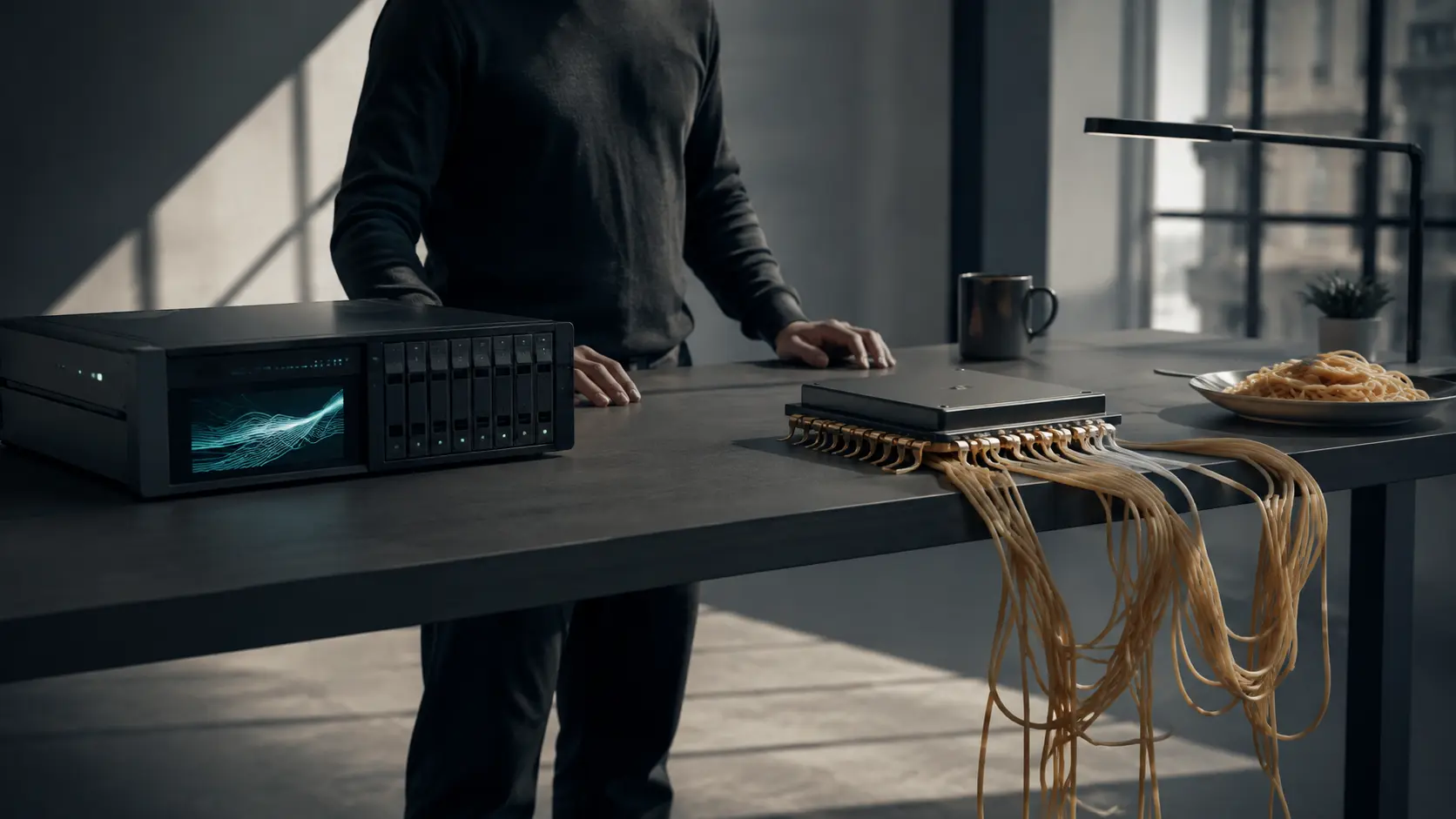
The smart model does not actually understand what it draws. It rapidly blends common visual patterns without true comprehension.
Spaghetti table scenario: Why does it expose the model in seconds?
Requesting a table with dry spaghetti legs holding concrete creates a contradiction. This scenario falls completely outside the usual training data for models. A study on AI testing proves models generate this impossible scene brilliantly. They do this without recognizing the imminent physical collapse.
The three pillars: Continuity, gravity, and reversibility of thought
The protocol measures three interconnected structural criteria for this AI test for designers. The first criterion is continuity across successive generation strips. It tests the stability of spatial relationships between elements. The second criterion involves applying gravity and physics constraints during generation. The third criterion tests the reversibility of thought over time. It tracks the causal sequence of events logically.
Study results: GPT-4o, Gemini 1.5 Pro, and Claude 3.5 Sonnet scored 4/30
We conducted intensive tests on three leading systems in early 2026. The overall score reached a mere four points out of thirty. The GPT-4o model showed complete visual confidence while ignoring physical impossibility. Gemini 1.5 Pro produced an excellent image but mixed past elements. Claude 3.5 Sonnet textually noted the danger of concrete weight. However, it immediately generated the physically impossible scene anyway. This contrast reveals a clear gap between language and physical application. This technical aspect becomes clearer when we examine practical execution steps.
How to run the AI test for designers in 15 minutes

You can conduct the full evaluation from your web browser. It requires absolutely no complex infrastructure or special setups.
Precise phrasing of the two prompts: initial scene and collapse
Open any generative model that possesses image processing capabilities. Enter the first prompt using its exact literal text. Ask it to draw a dining table with four spaghetti legs. These legs must hold a solid concrete slab. Add a fishbowl full of water on top of the slab. Take a screenshot of this initial result immediately. Send the second prompt immediately within the exact same conversation. Ask it to generate the same scene after five seconds. This happens after the spaghetti legs have completely collapsed.
Record results and classify them according to the three pillars
Examine the first image with purely objective human scrutiny. Did the model textually indicate the structural impossibility? Analyze the collapse image from the second prompt carefully. Did the fishbowl break and spill water due to gravity? Or did the model assume a magical force holding elements? Ensure no strange elements leaked from previous conversations into the result. Understanding UX design psychology helps analyze how models respond to these interactive pressures.
Share your results in the open GitHub database
This AI test for designers requires no complex or paid tools. You only need a standard web browser and fifteen minutes. Document your qualitative notes and the resulting images precisely. Use the submission template available in the parametric-agi-diagnostics repository. Your participation helps build a collective empirical map. This data defines the gap between corporate claims and actual capabilities. This practical understanding paves the way for custom testing scenarios.
Design your own AI test for your field: High-Entropy Prompts

Once you grasp the hidden principle behind the spaghetti protocol. You can easily build custom scenarios for your specific specialty.
Why do models fail outside training? Retrieval versus thinking
Current models rely on retrieving repeated statistical patterns. They do not think based on first physical principles. These unusual scenarios are known as high-entropy prompts. These prompts prevent the model from copying ready solutions. When no ready template exists, the lack of a physical world model appears.
Four criteria for an effective scenario: conflicting materials and domain knowledge
Start by combining materials with completely contradictory structural properties. For example, design a suspension bridge with wet paper columns. Add a solid gold roof to complete the impossible structure. Include an element that carries a massive load. This causes cascading consequences upon any structural failure. Use your direct professional expertise to select the scenario. An architectural designer knows exactly which loads cause immediate collapse. An anatomy illustrator knows which muscle structures are physically impossible.
Test one scenario across multiple systems for stronger evidence
Apply your custom scenario to multiple systems under identical conditions. Test GPT-4o, Gemini 1.5 Pro, and Claude 3.5 Sonnet simultaneously. When different systems fail in the exact same way, it proves architectural limits. The visual illusion transforms into solid evidence of generative boundaries. This evidence gives you sufficient vision to evaluate any tool. You can assess them before integrating them into real client projects.
Evaluating generative systems in real projects: A lesson from client work
Early in my AI adoption, I expected it to save weeks of planning. I created complex prompts to generate a financial dashboard. This dashboard included compound accounts and various edge cases. The generated dashboard looked fantastic during the initial presentation. I was thrilled until the dev team started coding. We discovered the system generated charts with contradictory numerical values. These values contradicted themselves on the exact same page. The model merely recalled the general shape of dashboards. It performed absolutely no logical mathematical calculations whatsoever. That oversight cost us a complete interface rebuild from scratch. We saved time initially but lost double that time fixing it. Since that day, I mandate physical and logical stress tests. This is now a mandatory step before relying on any tool.
Frequently Asked Questions
What is the AI test for designers or the spaghetti table protocol?
A: The spaghetti table protocol is a 15-minute AI test for designers. It exposes the inability of smart models to understand physical reality. It requests a physically impossible image like a spaghetti-legged table. This evaluation proves models produce visually stunning but structurally empty images.
Is running the AI test for designers expensive or complex?
A: Absolutely not, this test requires zero budget or complex tools. You only need a standard web browser and fifteen minutes. You just need an account in any publicly available generative model.
How do AI test for designers results compare across major models?
A: During execution, the three models failed in different ways. GPT-4o produced the impossible image confidently without any warnings. Gemini 1.5 Pro did the same while mixing past chat elements. Claude 3.5 Sonnet understood the problem textually but failed visually.
How can I run the spaghetti table protocol step-by-step?
A: Open any image generation tool and request the spaghetti table. Add a concrete surface and a fishbowl on top. Take a screenshot of the initial result immediately. In the same chat, request the scene after five seconds. Evaluate the result based on its adherence to physical gravity laws.
Can we trust AI in design if it fails this test?
A: The test proves AI excels at reproducing familiar patterns quickly. However, it completely lacks physical and logical understanding. You cannot trust it for design decisions requiring new architectural solutions. The designer must remain the guide with true real-world understanding.
Conclusion of the experience
AI is a wonderful tool for assembly and statistical retrieval. However, it does not possess a true physical world model. Your role as a designer goes beyond accepting beautiful visual outputs. It extends to deconstructing them and testing their structural logic. What bizarre scenario will you subject your favorite model to today?
Discover more from أشكوش ديجيتال
Subscribe to get the latest posts sent to your email.
![3 مراحل لتأسيس الهوية البصرية من استراتيجية العلامة [دليل]](https://hcouchd.com/wp-content/uploads/2026/08/file_0000000023d8822f8e619d5632f35c74-1024x576.webp)
![هل يتحول تصميم AirPods بالكاميرات من نكتة لأيقونة؟ [تحليل]](https://hcouchd.com/wp-content/uploads/2026/08/file_0000000041d88230aa3a1289b00f19f3-1024x576.webp)
![أفضل خطوط PowerPoint لتصميم عروض تقديمية احترافية [60 خط]](https://hcouchd.com/wp-content/uploads/2026/08/file_000000008b6481fd91951ad979a42aab-1024x576.webp)