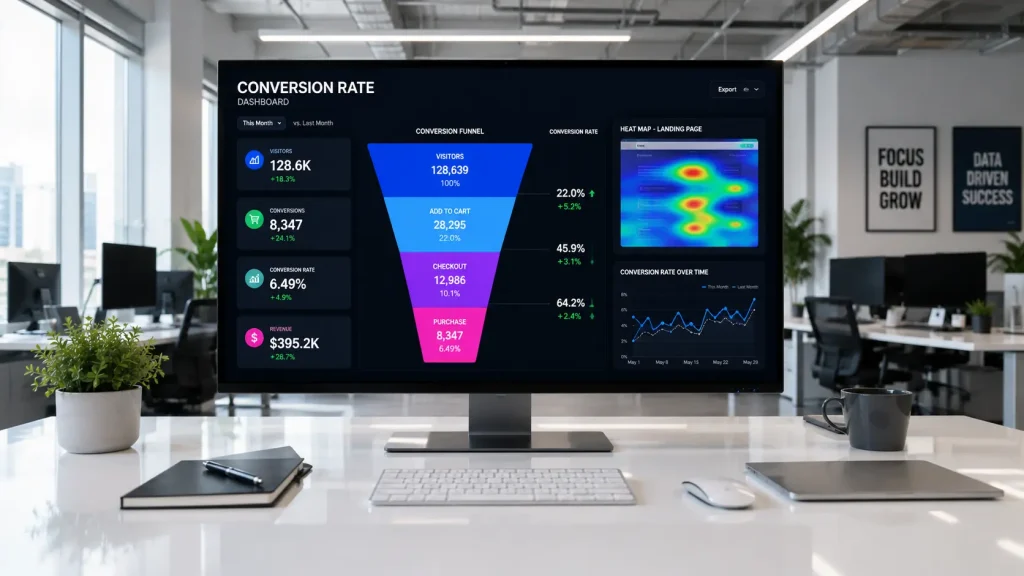
My client in Casablanca spent forty thousand dirhams on an ad campaign. The landing page conversion rate never exceeded 0.8%. Visitors entered and left within just fifteen seconds.
One Tuesday night, I opened Hotjar and reviewed the heatmaps carefully. I discovered that seventy percent of visitors never reached the pricing section. The problem wasn’t the design — it was the lack of data.
I moved the pricing section to the top of the page and added social proof. After two weeks, the rate jumped from 0.8% to 3.2%. The lesson is clear: guessing costs you more than any investment in data.
- What Is a CRO Strategy and Why It Goes Beyond Just Changing Buttons
- Why Ignoring Conversion Rate Optimization Is a Constant Leak of Your Ad Budget
- Setting Clear and Measurable Conversion Goals for Every Page
- Start With User Data, Not Your Gut: Analyzing Visitor Behavior
- Prioritizing Pages With the Highest Revenue Impact
- Running A/B Tests Based on Hypotheses, Not Guesswork
- Turning CRO Strategy Into a Continuous Habit, Not a One-Time Project
- Lessons From Ten Years of Building Successful CRO Hypotheses
- Summary of the Experience
What Is a CRO Strategy and Why It Goes Beyond Just Changing Buttons
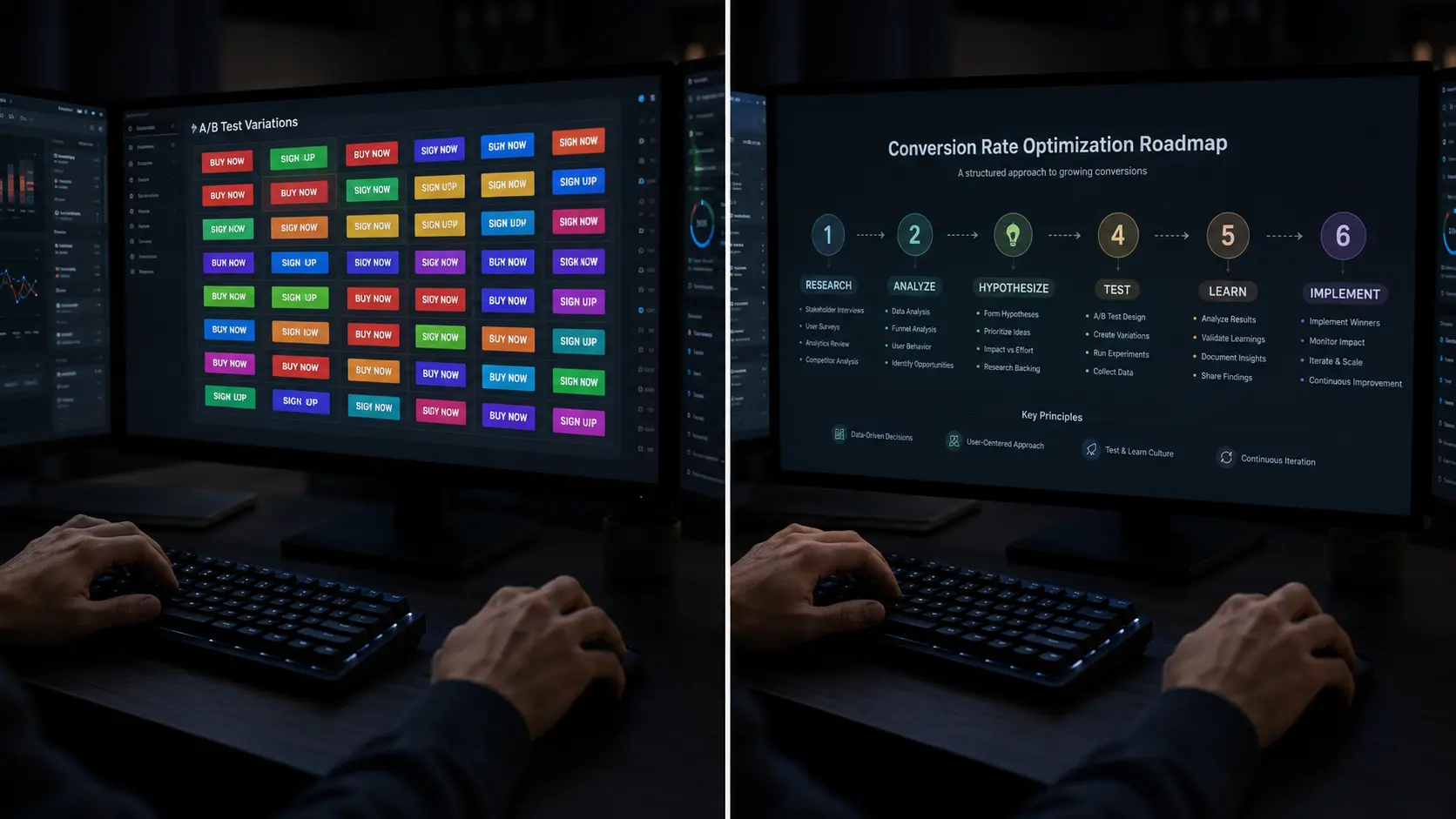
A conversion rate optimization strategy isn’t just randomly changing button colors. It’s a scientific methodology that relies on data to build and test hypotheses.
The Difference Between Random Experiments and a Systematic Strategy
Changing a button color without understanding user behavior is pure guesswork. A real strategy starts with a hypothesis backed by clear numbers.
In one project, we changed the button text and conversions increased by a tiny margin. But when we changed the value proposition based on surveys, sales doubled.
How CRO Gains Compound Over Time
Each small improvement builds on the previous one to lift overall performance. Gains of 1% multiply across the entire marketing funnel.
This compounding positively affects both email and sales. You can check out building a conversion strategy for more details.
This systematic understanding leads us directly to calculating the real cost of neglect.
Why Ignoring Conversion Rate Optimization Is a Constant Leak of Your Ad Budget

Every visitor who leaves without converting represents wasted ad spend. Ignoring this means you’re paying for visits that yield nothing.
Calculating Lost Revenue From Current Traffic
Let’s say your site gets ten thousand visitors per month. Your current conversion rate is 2% with an average profit of one hundred dollars.
Raising the conversion by just one point adds two hundred thousand dollars. That massive return comes from the same traffic volume.
Why CRO Gains Persist While Paid Ads Stop
Paid ads stop delivering results the moment you pause the budget. But site improvements work around the clock with no extra cost.
You’re building a digital asset that generates profits continuously and permanently.
To recover this lost money, we need to know exactly what to measure.
Setting Clear and Measurable Conversion Goals for Every Page

You can’t improve what you can’t measure accurately. Every page must be linked to two specific types of conversion goals.
Distinguishing Between Macro and Micro Conversions and Distributing Them Across Pages
Macro conversions are direct sales or quote requests. Micro conversions include newsletter signups or downloading a guide.
In a previous project, we divided goals to match each landing page. This precise distribution made performance tracking much easier.
Aligning Conversion Goals With Sales Funnel Stages
Each goal should reflect a specific stage in the sales funnel. Don’t ask for a purchase from a first-time blog visitor.
Ask them to subscribe first, then guide them through an email journey to purchase.
In an e-commerce project, we set the micro conversion as adding a product to the cart. This helped us track visitors who left before completing the purchase.
But how do we know if these goals are actually being met?
Start With User Data, Not Your Gut: Analyzing Visitor Behavior

Personal intuition is the enemy of real website improvement. You must rely entirely on analytics tools to monitor visitor behavior.
Using Google Analytics 4 to Track Conversion Events and Identify Weak Pages
I recommend using Google Analytics 4 and specifically the Reports → Conversions feature. I remember cutting hours of work by tracking purchase events there.
I used this data to identify form submission goals with pinpoint accuracy.
Extracting Insights From LOOP Analytics to Identify Friction Points in the Funnel
The LOOP Dashboard reveals the visitor’s path with remarkable clarity. It identifies the step where the most users drop off.
I used these insights to discover that the address step caused a major leak.
Collecting Qualitative Data From Surveys, Chats, and Abandoned Carts
Numbers tell you what happened, but surveys tell you why. I reviewed abandoned cart messages to find the reason for sudden drop-offs.
We discovered that unclear shipping options were the main cause.
After understanding behavior, we move to selecting pages worth the effort.
Prioritizing Pages With the Highest Revenue Impact

You can’t fix every page on your site at once. Focus on pages that directly generate revenue.
Making Pricing and Checkout Pages the Top Priority
Pricing and checkout pages are the customer’s final decision point. Fixing slow loading there boosts revenue immediately.
We added clear trust signals on a client’s checkout page. The completion rate rose by 15% within one week.
Converting High-Traffic Blog Posts Into Potential Customers
Articles with high traffic are an untapped goldmine. We added contextual calls-to-action and strategic pop-ups to them.
This simple conversion lifted the email list by 30%.
Product pages need high-quality images and clear details. We added a short video showing product usage on the landing page.
Visitor time on page increased by a noticeable 40%.
Now that we’ve identified the pages, how do we test changes correctly?
Running A/B Tests Based on Hypotheses, Not Guesswork
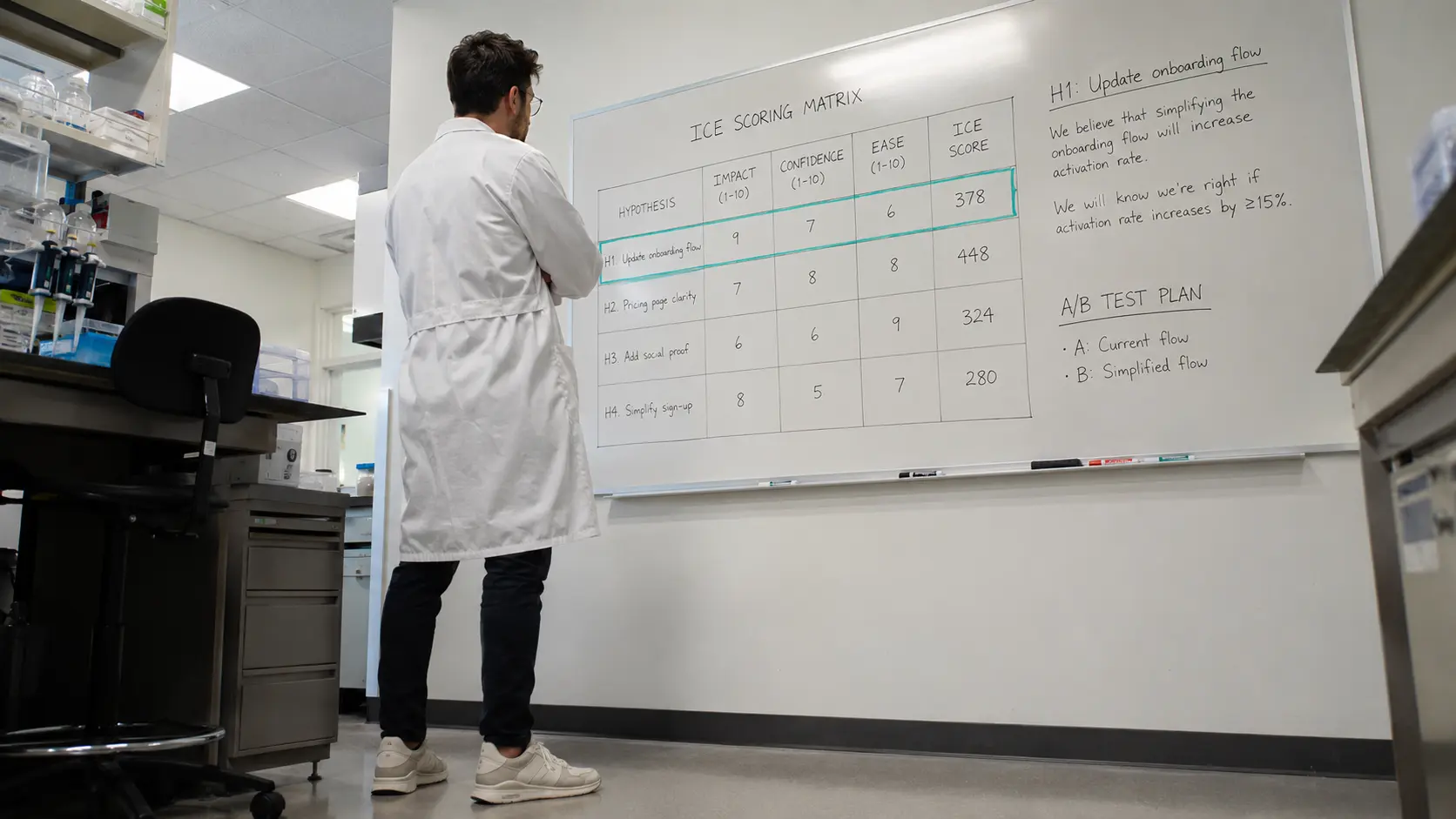
Random testing wastes your time and effort with no benefit. Use clear prioritization frameworks to choose what to test.
Prioritizing Tests Using the ICE or PIE Framework
The ICE framework evaluates ideas based on impact, confidence, and ease. This ensures you start with experiments that deliver the highest return.
I used this framework to rank a long list of improvement ideas.
Running A/B Tests via Convert and Tracking Statistical Significance
I recommend using Convert and specifically the traffic splitting feature. I remember using the Convert dashboard to create a control and a variant.
I monitored reaching statistical significance before making any decision.
We tried changing the buy button from blue to green. No statistically significant difference appeared after two weeks.
But changing the button text from “Buy Now” to “Get It” lifted conversions by a clear 12%.
Documenting Every Test Result in the Team Knowledge Base
Recording every hypothesis and result prevents repeating failed experiments. This builds a strong institutional memory for your CRO strategy.
We saved all results in a shared document for teams to review.
But testing once isn’t enough — it must become a habit.
Turning CRO Strategy Into a Continuous Habit, Not a One-Time Project

CRO is not a project that ends — it’s an ongoing process. Integrate this practice into the team’s weekly routine.
Building a Weekly, Bi-Weekly, Monthly, and Quarterly Testing Cadence
Review active experiments weekly and launch new tests every two weeks. Do deep monthly analysis and strategic planning every quarter.
This regular rhythm ensures the site evolves continuously and thoughtfully.
Sharing Learnings Across Teams to Foster a Culture of Experimentation
Publishing test results across teams prevents repeating costly mistakes. This turns optimization from an individual task into an institutional culture.
We held monthly meetings to discuss lessons from each test.
Learn more about AEO tracking via HubSpot for deeper data integration.
These ongoing practices reveal secrets you won’t find in documentation.
Lessons From Ten Years of Building Successful CRO Hypotheses
I fell into the trap of stopping tests too early at the start of my career. I’d see a small lead on day three and declare a winner immediately.
But the numbers changed radically by the fourth week. I learned that true statistical significance requires complete purchase cycles.
Now I never make a decision before at least two full weeks pass. This patience alone separates random guessing from data-driven decisions.
Frequently Asked Questions
What is a CRO strategy and what is a good conversion rate?
It’s a systematic plan to increase your site’s ability to convert visitors through continuous testing. The industry average is around 6.6%, but the real benchmark depends on your own historical performance.
Is building a CRO strategy expensive?
No, the main focus is extracting more value from your existing traffic. You can start with free tools, making the return on investment enormous.
What’s the difference between a CRO strategy and relying on paid ads?
Ads stop delivering results as soon as you pause the budget. CRO provides permanent gains that work around the clock at no cost.
How do I start implementing a CRO strategy for my site?
Start by defining clear conversion goals for each page, then analyze heatmaps. Focus on pricing pages and run tests changing one element at a time.
Is CRO safe and effective for my business in the long term?
Yes, it’s a reliable approach based entirely on data and precise testing rather than guesswork. This commitment ensures compounding results that increase customer loyalty and add real value.
Summary of the Experience
CRO is not an option — it’s a necessity for any digital business to grow. Start today by identifying the weakest page on your site and observing visitor behavior.
What tool are you currently using to monitor heatmaps and analyze behavior?
Discover more from أشكوش ديجيتال
Subscribe to get the latest posts sent to your email.
![ضاعف أرباح إعلانات Google Ads للفروع المتعددة [5 أسرار]](https://hcouchd.com/wp-content/uploads/2026/09/file_0000000060c081f58e0e7cfa4922ea6d-1024x576.webp)