

In today’s business world, a professional logo design is one of the most important elements of visual identity that distinguishes your brand from the competition. According to a recent study conducted by Nielsen in 2024, 75% of consumers remember a brand by its distinctive logo.
In the growing Arab market, where the Middle East region is experiencing rapid digital growth at a rate of 35% annually, having a unique and expressive logo has become an absolute necessity for the success of any business project.
- Understanding the fundamentals of visual identity before designing
- Steps to designing a professional logo from A to Z
- Modern and advanced design tools
- Common mistakes in logo design
- My personal experience: A success story from the Arab market
- Logo effectiveness testing and performance measurement
- Adapting to future trends
Understanding the fundamentals of visual identity before designing
Before delving into the design process, it’s essential to understand the fundamental principles of visual identity. A logo is not merely a beautiful image; it’s a symbol that embodies your brand’s values and message. From my experience designing over 200 logos for international and Arab companies over the past decade, I’ve observed that the most successful logos are those that strike a balance between simplicity and profound meaning .
The essential elements of a successful logo
A professional logo consists of several integrated elements:
• Shape and symbol : It should be distinctive and easy to remember
• Colors : They carry psychological connotations that affect customer perception
• Font : Reflects the brand’s personality and the nature of its business.
• Visual balance : Ensures the design is attractive and easy to read
Steps to designing a professional logo from A to Z
First step: Market research and analysis
Start with a thorough study of your target market and competitors. In 2024, visual trend analysis tools became more sophisticated, helping designers understand the preferences of the Arab audience more accurately.
Step two: Defining the brand personality
Define the key attributes of your brand:
- Seriousness or fun : Do you want a formal or friendly look?
- Traditional or modern : How much do you want to innovate?
- Simplicity or complexity : Do you prefer minimalist or detailed design?
Step three: Choose colors carefully
Colors have a strong psychological impact on consumers. According to a 2024 study by the Colormartek Institute:
• Blue : suggests confidence and professionalism (confidence increase rate 23%)
• Red : Stimulates enthusiasm and energy (increases attention by 31%)
• Green : symbolizes growth and sustainability (preferred by the new generation 28%)
Modern and advanced design tools
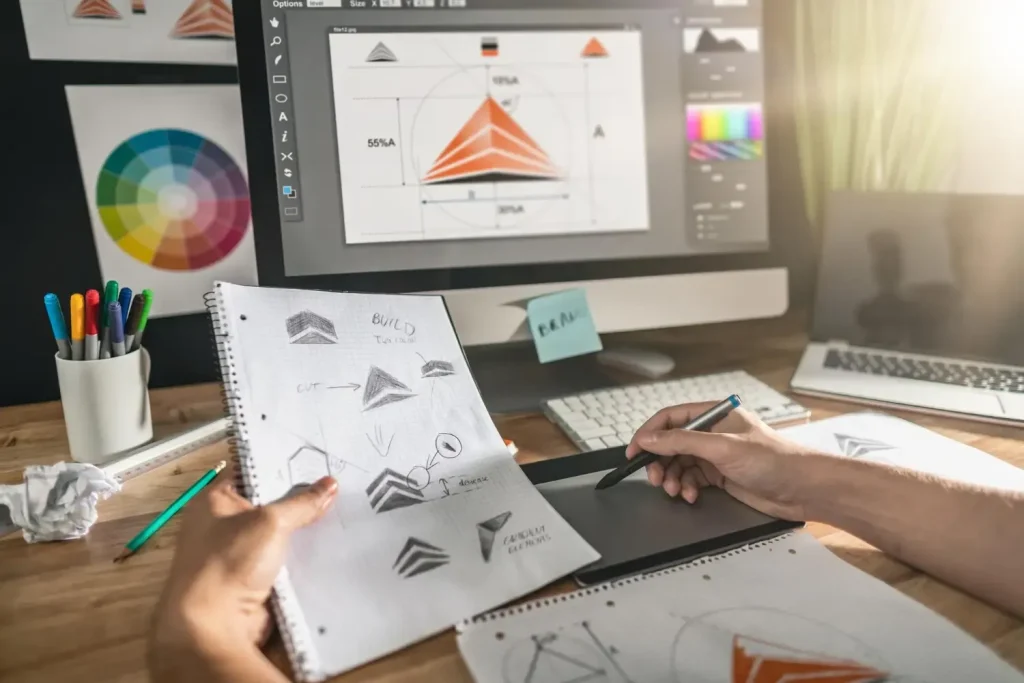
Professional platforms for designers
For professional designers, I recommend using advanced software such as Adobe Illustrator or Sketch, which provide high accuracy and flexibility in controlling every element of the design.
Easy platforms for beginners
For beginners or small business owners, simplified design platforms are an excellent option for easily creating attractive logos without the need for deep technical expertise.
Common mistakes in logo design
Through my review of thousands of designs, I’ve identified the most common mistakes to avoid:
excessive complexity
I often see designers trying to cram everything into a single logo. Simplicity is true elegance . Apple’s simple logo proves that strength lies in clarity.
Ignore applicability
Your slogan should effectively work on:
• Websites of different sizes
Official documents and printed materials
• Diverse social media platforms
• Mobile applications and digital platforms
My personal experience: A success story from the Arab market
In 2023, I collaborated with a fintech startup. The challenge was to design a logo that combined technological innovation with banking trust . After weeks of research and experimentation, we arrived at a design that combined clean geometric lines and a dark blue color that suggests stability.
The result was astonishing: brand awareness increased by 67% in six months, and trust among potential customers rose by 34%, according to an internal survey conducted by the company.
Logo effectiveness testing and performance measurement
Key Performance Indicators
To measure the success of your slogan, monitor these indicators:
- Recall rate : The percentage of customers who remember your logo after seeing it.
- Differentiation : The ability of the public to distinguish your brand from competitors.
- Engagement : Level of interaction with content related to the logo
Logo development as brand grows
A logo isn’t permanent. Continuous development is essential to keep pace with your brand’s growth and changing market expectations. Global companies like Pepsi and Mastercard update their logos regularly to remain modern and appealing .
Adapting to future trends
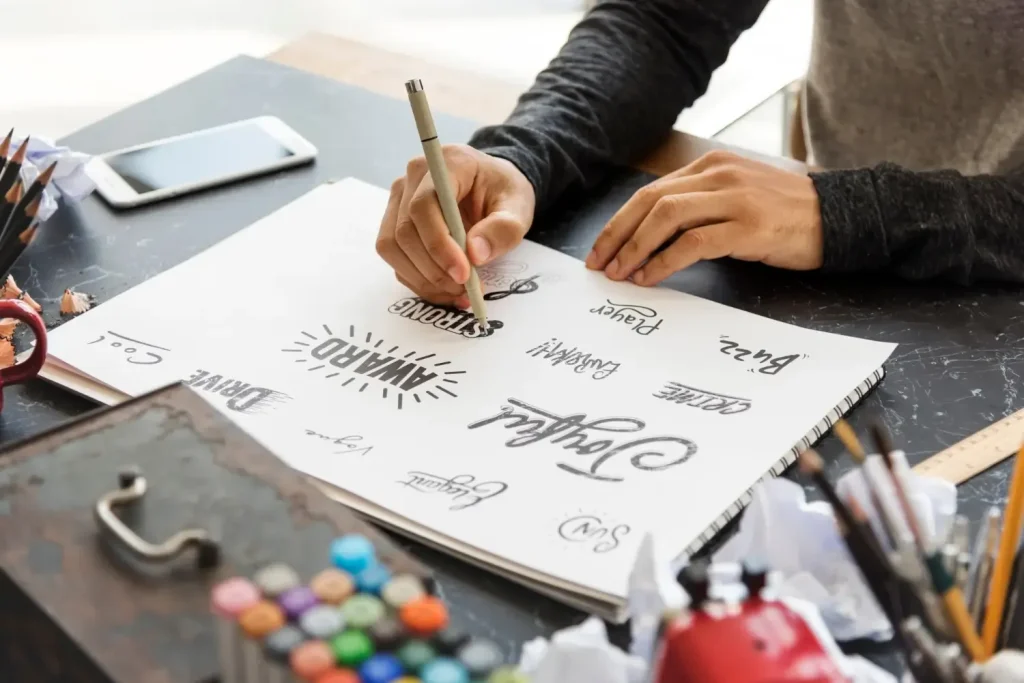
Artificial intelligence in design
With the rapid development of artificial intelligence, new tools have begun to emerge to help designers generate creative ideas and improve the design process. However, human taste and a deep understanding of local culture remain indispensable elements .
Responsive design
In the age of multiple screens, your logo must be adaptable to all sizes and formats, from smartwatches to giant screens.
Designing a professional logo is not just an artistic task, but a strategic investment in your brand’s future. With careful planning and a deep understanding of your audience, you’ll create a logo that leaves a lasting impression and helps build long-term trust with your customers.
Discover more from أشكوش ديجيتال
Subscribe to get the latest posts sent to your email.
![3 مراحل لتأسيس الهوية البصرية من استراتيجية العلامة [دليل]](https://hcouchd.com/wp-content/uploads/2026/08/file_0000000023d8822f8e619d5632f35c74-1024x576.webp)
![هل يتحول تصميم AirPods بالكاميرات من نكتة لأيقونة؟ [تحليل]](https://hcouchd.com/wp-content/uploads/2026/08/file_0000000041d88230aa3a1289b00f19f3-1024x576.webp)
![أفضل خطوط PowerPoint لتصميم عروض تقديمية احترافية [60 خط]](https://hcouchd.com/wp-content/uploads/2026/08/file_000000008b6481fd91951ad979a42aab-1024x576.webp)