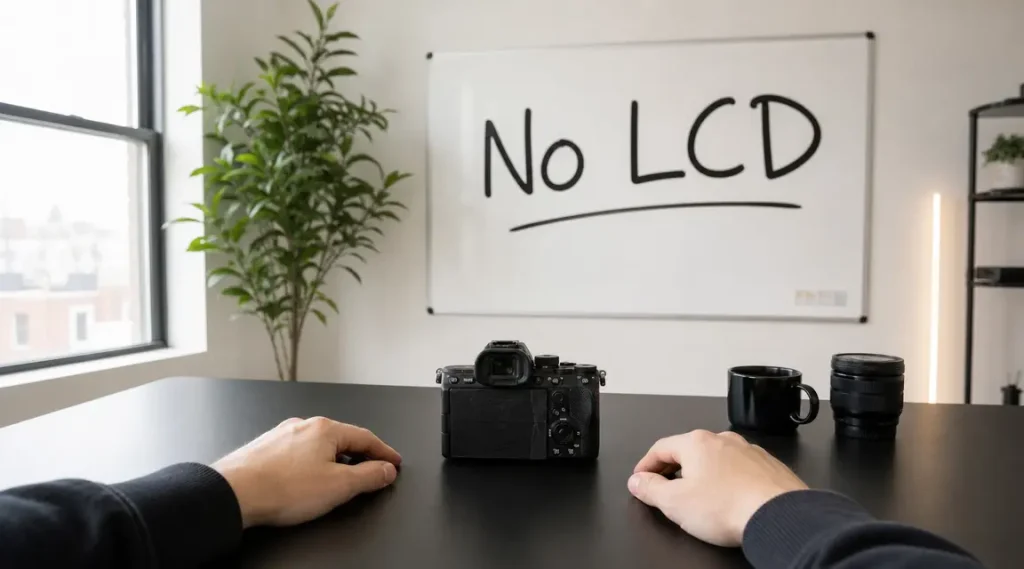
Practicing shooting without the LCD completely changes the game. You stop chasing moments when you lower the camera. A photo delivery for a book signing event in Casablanca was due in the morning. I lowered the camera to check focus accuracy on the screen. I missed the critical handshake between the director and the investor. I felt intense frustration in front of the client that day. I realized my obsession with reviewing was destroying workflow continuity. During the next product session at TwiceBox agency, I broke this habit. I disabled auto review and relied on the live histogram. I delivered four hundred sharp images to the client instead of one hundred fifty. I saved three full hours of sorting and comparing. That is why I built Hcouch Digital blog to share these shortcuts.
- The Hidden Price of the Every-Photo Review Reflex
- How Mirrorless Cameras Changed the Review Habit
- Practical Steps to Break the LCD Addiction for Good
- What to Do in the Seconds You Used to Waste on Reviewing
- How to Build Absolute Trust in Your Settings Without Looking at the Screen
- When Is Checking the LCD Necessary and Unavoidable?
- Shooting Without LCD: From Personal Challenge to Professional Mastery
- What I Learned from 500 Photo Sessions About Custom Camera Buttons
- Conclusion
The Hidden Price of the Every-Photo Review Reflex
How the Review Reflex Steals Your Golden Moments
The shoot-and-review cycle takes several seconds. The camera leaves your face and drops toward your chest. You lose direct visual contact with the scene. You stop noticing fleeting expressions on your subject. Time gets wasted evaluating a past image. You miss natural interaction with your subject. You can never recover the decisive moment.
Over-Reliance on the Screen and Its Impact on Your Artistic Confidence
Constant checking delays building visual intuition. You replace your real skill with a small screen. You stop developing light sensitivity. This creates a loop of persistent doubt. You become a prisoner of digital screen confirmations. This loop disrupts the photographer’s self-growth.
Why Wedding and Press Photographers Fear This Addiction
Wedding environments move at a very fast pace. The bride’s father sheds tears for just seconds. A celebration moment never repeats. An addicted photographer loses that shot forever. Professionals confirm that review addiction destroys work. I recently read about stopping LCD checking and its impact.
Understanding this price requires knowing how modern technology solved this dilemma.
How Mirrorless Cameras Changed the Review Habit
Live Exposure Preview: Why You No Longer Need to Check the Screen
The electronic viewfinder shows the final image. You see the actual exposure before pressing the shutter. You clearly see shadows and highlights. You notice white balance errors instantly. This eliminates guessing your settings.
In-Viewfinder Histogram: Your Eyes on the Scene and the Data Together
You can enable the live histogram. You monitor exposure without lowering the camera. You avoid incorrect exposure before it happens. You maintain full focus inside the scene.
From DSLR to Mirrorless: The Visual Trust Revolution
DSLR cameras hid the exposure. This gap forced you to check the screen. Modern cameras completely closed that gap. Preview became instant and fully reliable. The compulsive urge for constant review disappeared.
After understanding the technical advantage, we move to practical steps for implementing this change.
Practical Steps to Break the LCD Addiction for Good
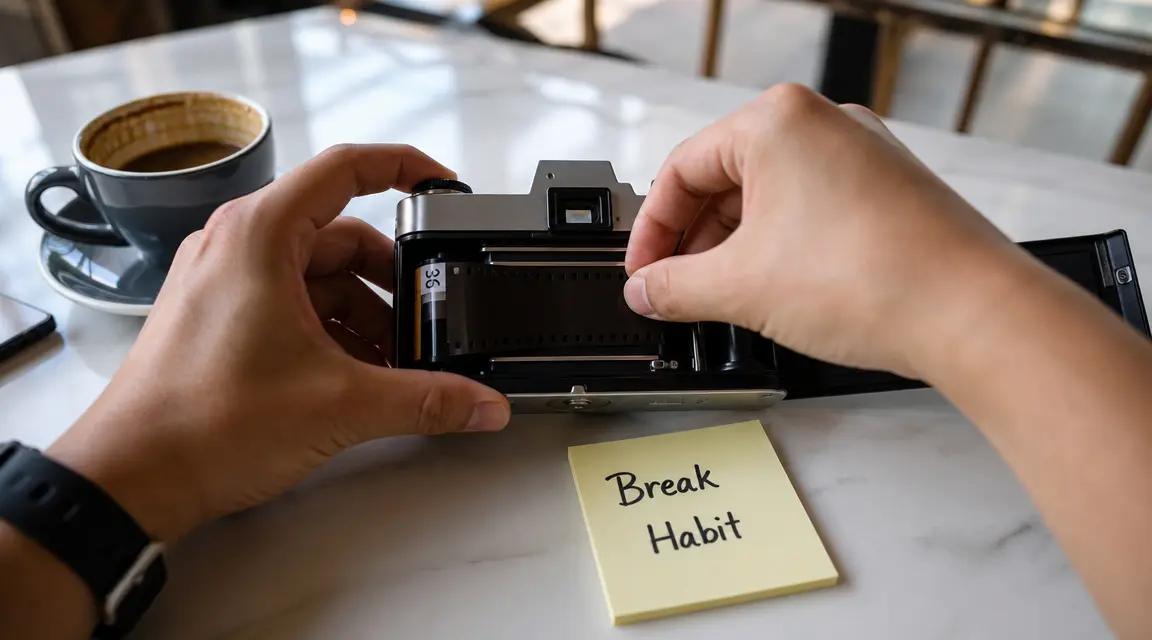
Turn Off Auto Review: Your First Line of Defense Against the Habit
Find the Image Review option. The label varies by camera brand. Disable it completely from the main menu. This removes the negative trigger for review. You decide to review consciously only when needed.
The 36-Shot Challenge: Train Yourself to Trust Your Settings
Commit to just thirty-six exposures. Block yourself from reviewing any image. This simulates film photography. Builds your confidence in final results. You discover your skills are better than you think. I tried this challenge during the Sony World Photography Awards.
Shoot with the Screen Off: The Bold Step Toward Freedom
Use settings to disable the rear LCD. Rely entirely on the viewfinder. This removes temptation at its root. It forces you to focus on composition.
When you stop reviewing, you discover new ways to invest the reclaimed time.
What to Do in the Seconds You Used to Waste on Reviewing
Watch Your Subject: The Next Moment Is Often the Best One
The subject relaxes after the shot. Children notice the camera then forget it. Facial expressions shift naturally. You capture a stronger, more authentic image. I used to struggle with photographing kids. I kept my eye on the viewfinder after each shot. I got the most beautiful candid smile.
Track the Changing Light: Golden Opportunities Appear and Disappear Fast
The sun moves behind clouds quickly. Clouds shift and change lighting rapidly. Sudden beautiful light reflections appear. You need an eye connected to the scene.
Scan the Background with Your Eye: Eliminate Distractions Before They Enter the Frame
Visually scan the background between shots. Notice a distracting tree branch. Spot distracting elements early. Adjust your position before pressing again. You save hours of time in Lightroom.
This constant monitoring requires deep trust in your camera’s technical settings.
How to Build Absolute Trust in Your Settings Without Looking at the Screen
Memorize Your Daily Exposures: From Open Shade to Sunset
Build a mental library of exposure values. Record settings in a notebook. Memorize open shade settings precisely. Dial in the camera instinctively without hesitation.
Test Your Autofocus System Before the Session and Banish Doubt
Quickly verify eye-tracking reliability. Test the system on a moving target. Confirm continuous focus accuracy. Trust that every shot is sharp. No need to zoom on the screen.
The Blind Shooting Exercise: Trust Your Eye, Not the Screen
Train yourself on manual composition. Rely on muscle and visual memory. Avoid previewing for a short period. This sharpens your internal sense of framing.
Despite the importance of screen liberation, there are cases where checking the LCD is essential.
When Is Checking the LCD Necessary and Unavoidable?
Start of a Session or Changing Conditions: Calibrate Exposure and White Balance
Use the first frames for calibration. Confirm there is no error. Adjust the histogram and color temperature. Verify that basic settings are accurate.
After a Complex Technical Shot: Off-Camera Flash and Long Exposure
Verify that complex lighting worked. Avoid resetting the entire light setup. Review long exposures on a tripod. This is justified exceptional review.
Tethered Shooting and Client Presence: Review as a Production Tool
Review becomes part of the workflow. The client watches a large monitor. The client requests immediate changes. This does not become an addiction.
A proper understanding of these cases paves the way to true professionalism.
Shooting Without LCD: From Personal Challenge to Professional Mastery
What Will You Notice After a Week of Shooting Without Constant Review?
Your response speed increases significantly. The number of deleted images drops. The count of impactful shots rises. You feel complete immersion in the scene.
How Will Others See Your Work After You Break Free from the Screen?
This reflects in your visual storytelling. The viewer feels the moment’s spontaneity. Candid, human images multiply. Your photos tell a deeper, truer story.
The Transformation Stages: From Hesitation to Full Immersion in the Scene
Your psychological need for the screen fades. You merge completely with the surrounding environment. Photography becomes a continuous flow. The camera becomes a silent tool.
We now reach the practical conclusion that will change your workflow forever.
What I Learned from 500 Photo Sessions About Custom Camera Buttons
I faced a problem accessing screen settings quickly. I was losing precious seconds in sub-menus. I assigned the C1 custom button on my camera. I linked this button to the Monitor Off option. I could now turn off the screen with one touch. I turn it off during fast street shooting. I turn it on immediately when technical review is needed. This simple modification saved me a huge amount of time. I recommend trying this assignment in your next session.
Conclusion
Liberation from the screen frees your real creativity. Invest your time in watching the scene and its details. Disable automatic review on your camera today. What custom button do you use to control your screen?
Discover more from أشكوش ديجيتال
Subscribe to get the latest posts sent to your email.