
Most ad campaigns do not fail due to one catastrophic error. They die slowly from a continuous budget bleed. The real solution is not a full campaign overhaul. You must apply iterative A/B testing to your workflow. This method relies on small, compounding improvements that create real impact.
I was reviewing a campaign for a major restaurant chain. We were just hours away from the official launch. We spent part of the budget on a single landing page version. I was shocked when the conversion rate stayed at 0.8%. I felt genuine frustration while calling the client. I had to explain this weak performance clearly. Instead of quitting, I immediately opened Unbounce to fix it. I decided to run a quick iterative A/B test. I simplified the main headline to improve clarity. I removed a complex paragraph from the layout. I added a real customer testimonial next to the submit button. After two weeks of close monitoring, the conversion rate jumped to 2.4%. That equals three times the previous result overall. The client called to confirm unprecedented booking volumes. We saved the entire quarter budget through one simple tweak.
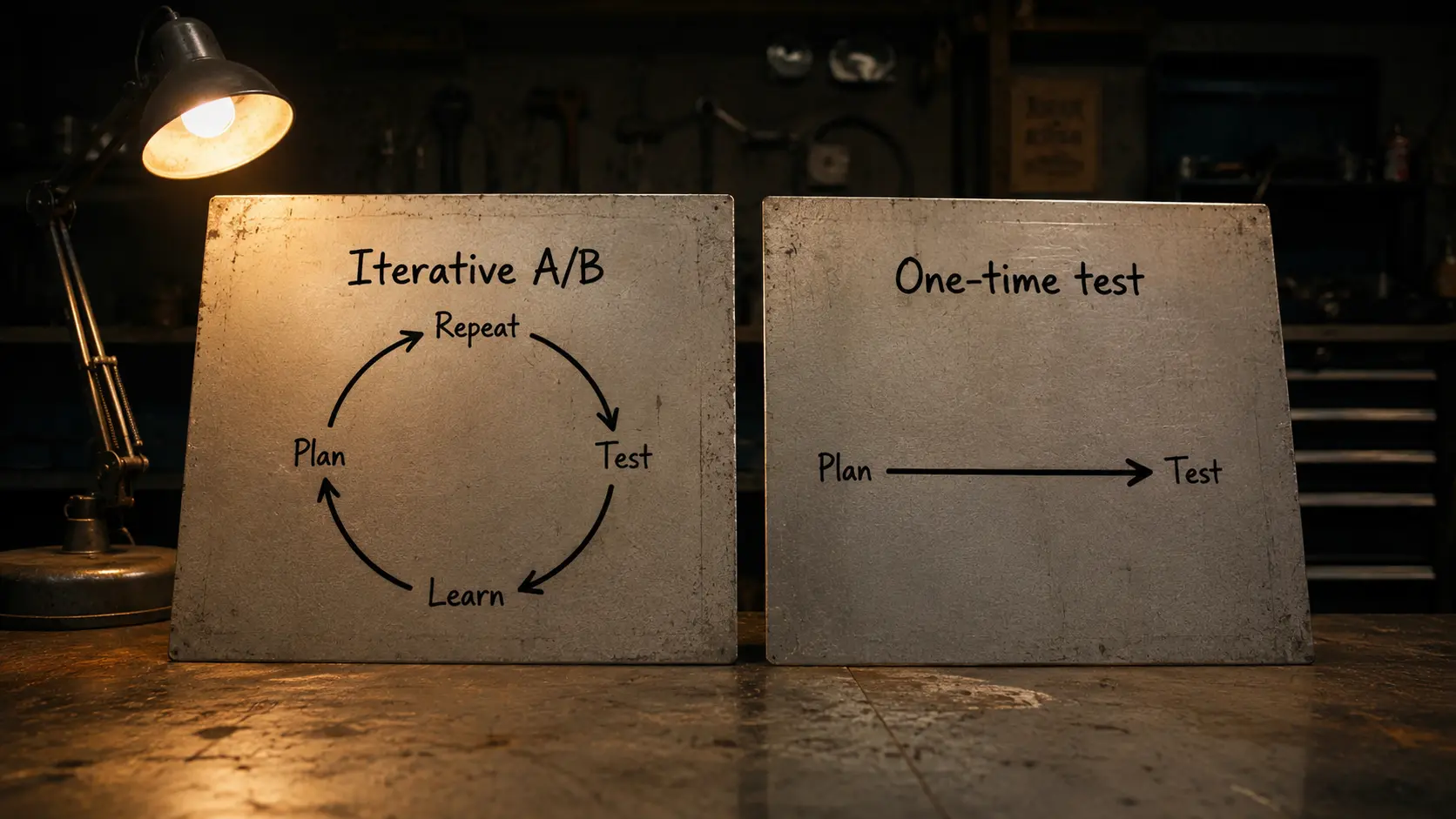
Iterative testing means designing a never-ending cycle. You constantly check, measure, and adjust based on real user behavior. It is not a one-time yearly event. It is a permanent workflow that continuously improves your digital assets.
- 1 The Core Difference Between One-Time Tests and Iterative Cycles
- 2 Why Campaigns Fail Slowly Instead of All at Once
- 3 Compounding Improvements: How Small Wins Stack Up
- 4 How Iterative A/B Testing Boosts Marketing Campaign Performance
- 5 Steps to Implement Iterative A/B Testing: A Practical Process for Marketers
- 6 Technical Settings and Statistical Significance Standards in Iterative A/B Testing
- 7 Best Practices for Iterative A/B Testing That Does Not Waste Your Budget
- 8 Iterative A/B Testing Tools: Choosing the Right Platform for Your Project
- 9 Building a Culture of Continuous Experimentation in Your Marketing Team
- 10 How to Avoid the Statistical Trap That Destroys Startup Budgets?
- 11 Conclusion
The Core Difference Between One-Time Tests and Iterative Cycles
Traditional testing ends once you declare a winner. You close the experiment completely without investing the results. The iterative approach treats that win as only the first step. Every result gives you new data. You immediately build your next test on that foundation.
Why Campaigns Fail Slowly Instead of All at Once
Companies lose budgets due to small leaks in landing pages. Sales path friction often escapes traditional analytics. Iterative testing plugs these gaps with precision. It reduces the risk of massive changes. It also allows instant adaptation to target audience behavior.
Compounding Improvements: How Small Wins Stack Up
Raising your conversion rate by just 2% per cycle yields massive long-term growth. Data from the 2025 Conversion Rate Optimization Guide shows a clear trend. Simplifying copy to a fifth-grade reading level doubles conversions. Complex professional writing performs significantly worse.
This understanding of numerical growth leads directly to campaign management changes.
How Iterative A/B Testing Boosts Marketing Campaign Performance

This approach gives you three core advantages. These benefits ensure you outperform competitors relying on guesswork.
Faster Feedback Loops Mean Faster Growth
Iterative testing shrinks result timelines from months to days. You save your budget early. Smart systems like Smart Traffic start optimizing after just 50 visits. This enables rapid testing even for lower-traffic campaigns.
Reducing Wasted Spend Through Evidence-Based Changes
Instead of risking your entire quarterly budget on untested ideas, test with a limited amount first. A past subscription project proved this concept. We simplified complex terms and conditions. Sales increased without any price changes.
Adapting to Evolving User Needs Each Cycle
Buying behavior shifts constantly across demographics. Your marketing messaging requires high flexibility. Continuous iteration tracks these shifts accurately. You adjust offers for mobile or desktop devices. You respond to real-time user behavior patterns.
Let us now explore the practical side. You will see how to apply this cycle step-by-step.
Steps to Implement Iterative A/B Testing: A Practical Process for Marketers

Success requires a clear methodology. This approach ensures data accuracy. It also prevents random decision-making.
Formulate a Focused Hypothesis and Target One Element
Start with a highly specific hypothesis. Example: “Changing button text to direct phrasing will increase click rates.” Never change multiple elements simultaneously. You will never know which change caused the improvement.
Prioritize Tests Using an Impact Versus Effort Matrix
Use a matrix to rank your ideas. Target quick, high-impact changes first. This builds immediate momentum. Focus on headlines and call-to-action buttons. Save full page structure changes for later phases.
Analyze Results and Extract Actionable Insights
Do not just note the winner after a successful test. Study the interacting segment deeply. Avoid confirmation bias at all costs. Never rush decisions based on small traffic samples.
Iterate and Expand: From One Win to a Continuous System
Adopt the winning version as your new baseline. Design the next hypothesis immediately for the following element. Even failed tests provide valuable context. They reveal what your target audience currently rejects.
Applying these steps successfully requires precise technical tuning. Statistical accuracy guarantees valid data.
Technical Settings and Statistical Significance Standards in Iterative A/B Testing
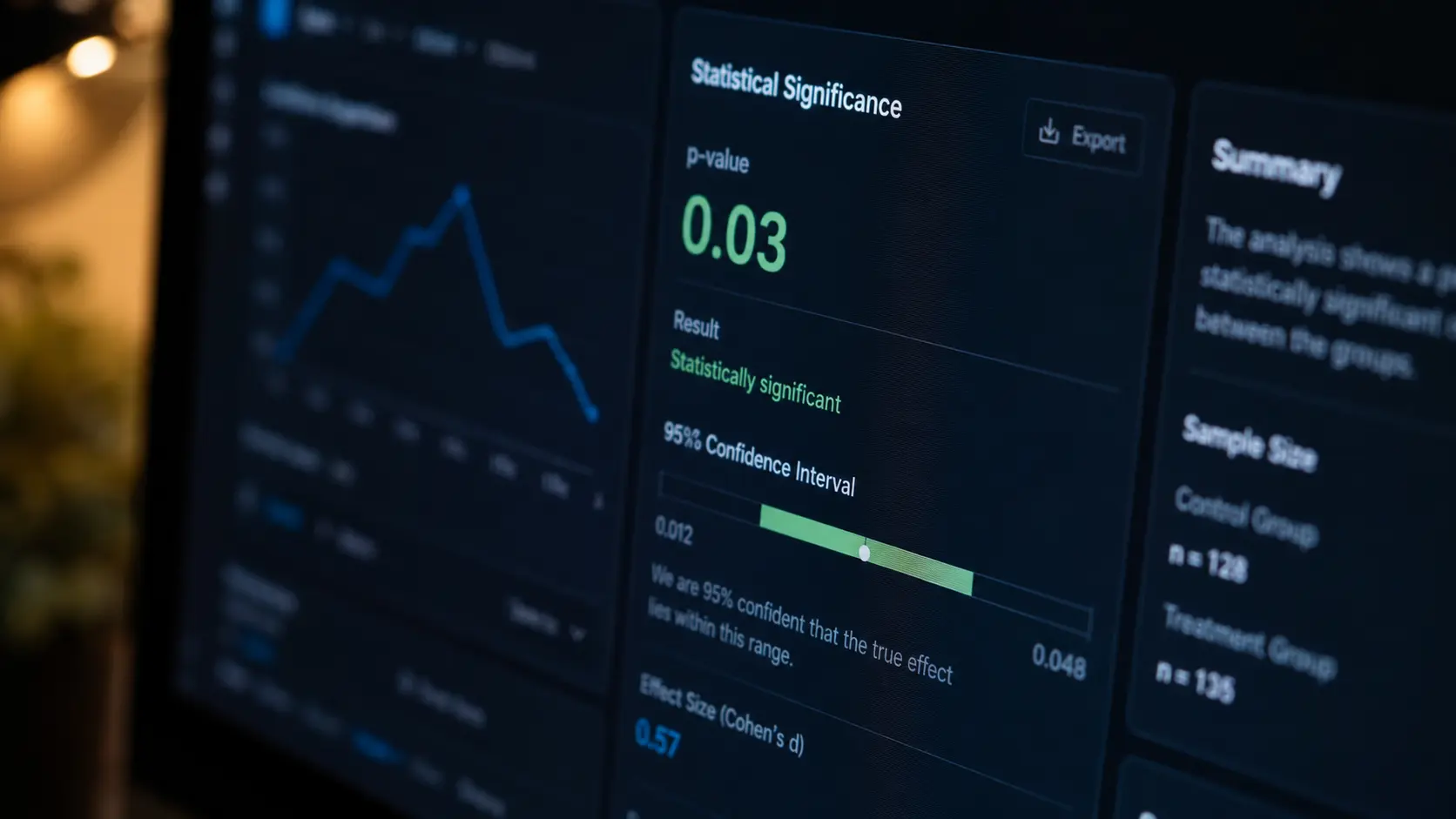
Decisions based on wrong numbers hurt your business. They also cost you heavily. You must understand the technical side thoroughly.
Traffic Split: Why 50/50 and Not 70/30
Set visitor distribution exactly equal at 50/50. This ensures statistical fairness between versions. Unequal splits like 70/30 bias your data. They ruin the accuracy you need for performance evaluation.
Test Duration: When to Stop and When to Continue
Run the test for a pre-set period. The minimum duration is seven full days. This covers daily behavior fluctuations. Stopping early after day one progress is a common error.
Statistical Significance Level: p-Value Threshold ≤ 0.05
Never rely on results until significance hits 95% confidence. This equals a p-value ≤ 0.05. Use the platform calculator to verify the difference. Ensure the gap reflects real improvement. Random chance should not drive your decisions.
These technical adjustments lead directly to creative rules. These rules protect your budget during design.
Best Practices for Iterative A/B Testing That Does Not Waste Your Budget

Smart test design saves significant time and effort. It ensures clear and fast results.
Isolate the Single Variable: Change Only One Element Per Cycle
Focus on precise isolation during design. Change exactly one detail. Keep all other factors static. Replace the blue button text from “Sign Up” to “Start Free Trial”. Keep the exact same position.
Maintain Visual Consistency Between Versions
Use identical fonts, colors, spacing, and images in both variants. Prevent distracting users with side factors. Unintended identity changes ruin your data. They make identifying the real cause difficult.
Cross-Team Collaboration to Generate Hypotheses Based on Real Interactions
Do not rely solely on marketing guesses. Ask your sales and support teams for input. Daily interactions and complaints are valuable mines. They generate testing ideas for your pages. Improve your sales paths effectively.
Selecting the right tools simplifies this process. You must match the platform to your project size.
Iterative A/B Testing Tools: Choosing the Right Platform for Your Project

Platforms vary widely across the market. Features differ based on your budget. Team technical skills also dictate your choice.
Google Optimize: Free Starting Point for Beginners
This tool provides a free dashboard. It integrates fully with Google Analytics. Setup becomes simple without complexity. Open your Google Analytics account. Navigate to Property > Optimize. Click Create experiment. Design your first tests easily.
Optimizely: For Advanced Teams Needing Complex Statistical Models
This platform is the strongest choice for large companies. It offers advanced customization features. Multivariate testing capabilities are also available. Log in and go to Experiments. Click New Experiment. Launch AI-driven smart campaigns quickly.
VWO: Cost-Effective Solution for Landing Page and Conversion Path Optimization
This platform features integrated heatmaps. You can understand eye movement precisely. Choose Create Test from the dashboard. Select A/B test immediately. Start modifying text and designs easily.
Tool selection represents half the journey. The other half involves embedding practices. Your team must adopt this as a permanent workflow.
Building a Culture of Continuous Experimentation in Your Marketing Team
A data-driven shift requires changing the institutional mindset. You must abandon individual decision-making.
Make Data-Driven Decisions, Not Intuition-Based Ones
Eliminate reliance on the HiPPO method. Replace it with proven statistical facts only. Run every visual or text change through a data filter. Require clear success rates beyond chance.
Treat Every Winning Variant as a New Baseline for Next Test
Publish the winning version immediately after the experiment ends. Make it the standard to beat next time. This continuous cycle ensures compounding gains. Total profit growth becomes visible by year-end.
Keep Tests Simple and Fast to Maintain Momentum
Focus on core KPIs like conversion rate. Track ROAS accurately. Avoid distracting the team with secondary metrics. Speed and simplicity fuel continuous experiments. Improvement becomes a natural daily routine.
Simple site files can affect smart systems. You can read more about this in our llms.txt analysis article. It explains how robots process your data.
How to Avoid the Statistical Trap That Destroys Startup Budgets?
I made a serious early career mistake. Most marketers repeat this exact error. I stopped tests upon seeing promising green indicators. I remember an e-commerce project we ran. We changed the buy button color. Sales jumped 40% in 48 hours. The new version performed exceptionally well. I felt happy and stopped the test. I adopted the color immediately. I thought it was a quick win.
The shock arrived after two weeks. Sales dropped below old levels. We suffered a clear ROI loss. Deep technical analysis revealed the truth. The sample size in the first two days was tiny. We missed the required statistical significance. The spike was a random coincidence. That specific day brought pre-warm traffic.
I learned an unforgettable lesson since then. Never stop a test before seven full days pass. Always hit the pre-set sample size. Early numbers are highly misleading. Statistical patience protects client funds. It prevents rash decisions based on illusions.
Frequently Asked Questions
What is the minimum duration for iterative A/B testing?
Run any test for at least seven full days. This covers all traffic fluctuations. It also captures user behavior across weekdays. Stopping early exposes you to inaccurate results.
Can I test multiple different elements simultaneously?
Strongly advise against it in simple iterative testing. You cannot identify the responsible element. Performance changes become impossible to track. Switch to complex multivariate tests for multiple elements.
How should I act if results show no difference between versions?
No difference is a highly valuable result. It tells you the tested element is not influential. Take this insight immediately. Test another hypothesis targeting a different element. Focus on the offer or price instead.
Conclusion
Do not seek magical solutions to save campaigns. Start today with your first iterative A/B testing cycle. Apply it to your main landing page. Simplify the headline or change the CTA text. Monitor the results precisely for one full week. Use proper measurement tools throughout the process.
What tool do you currently use to measure landing page performance? Do you verify statistical significance before accepting results?
Discover more from أشكوش ديجيتال
Subscribe to get the latest posts sent to your email.