In a world increasingly reliant on visual content, professional photography has become essential for both individuals and businesses. With the growing demand for high-quality visual content in the Arab region, particularly driven by the rise of e-commerce and social media, professional photography skills have become a lucrative investment and a promising career path.
In this comprehensive guide, we’ll explore how to improve your photography skills and turn them into a profitable business . Fundamentals of professional photography.
The path to professional photography begins with understanding three fundamental concepts: aperture, shutter speed, and ISO sensitivity. These elements form the “exposure triangle” that determines the quality of the final image.
The aperture plays a role in determining the depth of field and the amount of light allowed to enter. Large apertures (f/1.4 – f/2.8) are ideal for portrait photography and background blur, while small apertures (f/8 – f/16) are suitable for landscape and architectural photography.
Shutter speed determines how long the sensor is exposed to light. High speeds (1/500s or faster) freeze motion, while slow speeds create interesting motion effects.
- Basic composition rules
- Essential equipment for a professional photographer
- Choosing the right camera
- Essential accessories
- Advanced lighting technologies
- Artificial lighting technologies
- Profitable types of professional photography
- Digital editing and processing
- Building a strong professional portfolio
- Marketing and promoting your services
- Practical tips for developing skills
- The future of professional photography
Basic composition rules
Applying the rule of thirds dramatically improves the appeal of your photos. Imagine a grid of nine squares on your camera screen; place the important elements on the intersecting lines to create a natural visual balance.
Directional lines guide the viewer’s eye toward the main element. Use lines of roads, rivers, and buildings to create a clear visual path.
Essential equipment for a professional photographer
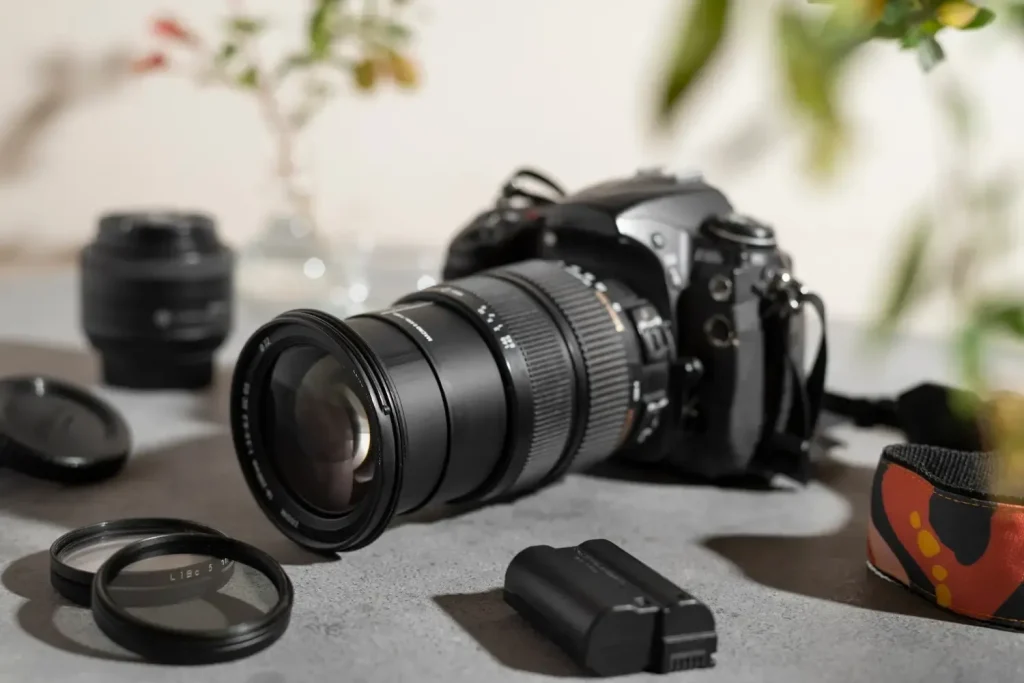
Choosing the right camera
For serious beginners, DSLR cameras like the Canon EOS 90D or Nikon D7500 offer an excellent balance between price and performance. For professionals, full-frame cameras like the Sony A7 IV or Canon EOS R6 Mark II deliver exceptional image quality.
Lenses are the most important investment. Start with a 50mm f/1.8 lens for portraits, a 24-70mm f/2.8 for general use, and a 70-200mm f/2.8 for sports and wildlife photography.
Essential accessories
- Carbon fiber tripod stand to reduce vibration
- External flash drives with wireless control
- ND filters for exposure control
- Extra batteries and high-speed memory cards
Advanced lighting technologies
Natural light remains the best option for photographers. The golden hour (one hour after sunrise and one hour before sunset) provides a warm, soft light ideal for portraits and landscapes.
Artificial lighting technologies
Triple lighting is the foundation of professional lighting:
- Main light : The primary lighting for the subject
- Fill light : reduces the intensity of shadows
- Background light : separates the subject from the background
- Using softboxes and umbrellas provides gentle, natural lighting, while reflectors perfectly balance the light distribution.
Profitable types of professional photography
Wedding and event photography
Wedding photography is one of the most lucrative types of photography in the Arab world. This field requires quick reflexes and skill in capturing natural moments. Use wide-aperture lenses (f/1.4 – f/2.8) for shooting in low-light conditions.
Photographing business events such as conferences and exhibitions provides a steady income. Focus on capturing moments of interaction and presentations from a variety of angles.
Commercial and advertising photography
Product photography has become a top priority with the growth of e-commerce. This field requires a deep understanding of lighting and neutral backgrounds to highlight product details.
From my personal experience, I’ve noticed that Arab startups increasingly need professional visual content for social media. This field offers golden opportunities for young photographers.
Digital editing and processing
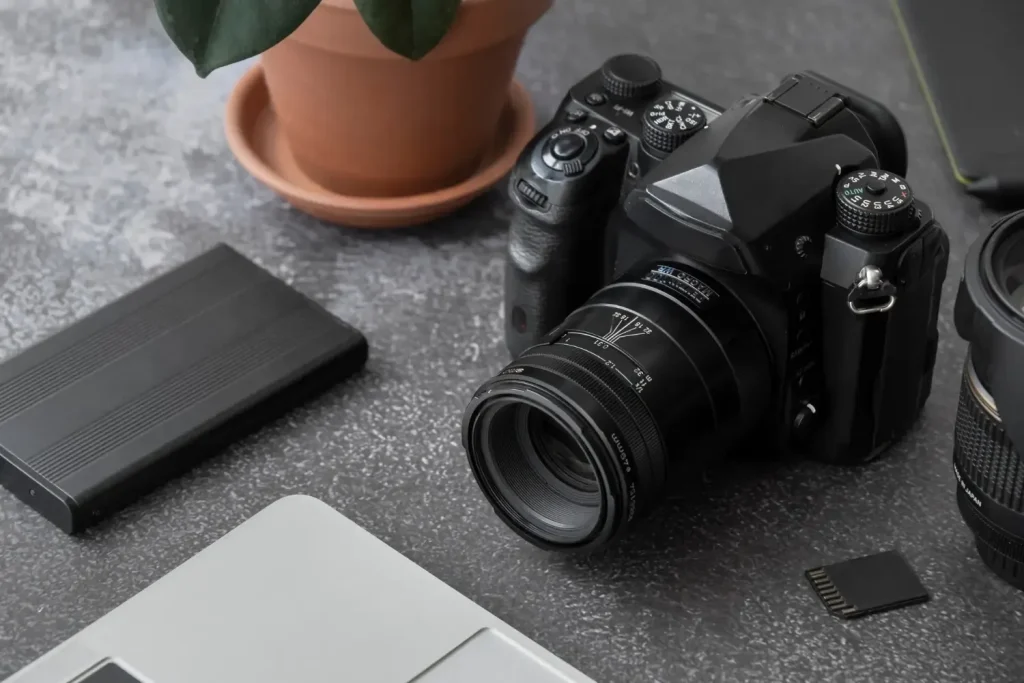
Basic editing programs
Adobe Lightroom is the ideal starting point for image editing. It offers powerful tools for color correction, exposure, and basic enhancements
Adobe Photoshop is an important program for advanced editing. It can be used to remove imperfections, composit, and add special effects.
Modern processing techniques
- Color correction using RGB curves
- Increased sharpness using Unsharp Mask technology
- Reduce noise in high ISO images
- Creating HDR from multiple exposures
For Arab photographers, I recommend studying the principles of photography in an organized way to establish a solid foundation.
Building a strong professional portfolio
Choosing the best works
Quality over quantity – Choose 20-30 diverse images showcasing your skills in different areas. Ensure variety in:
• Photography genres (portrait, nature, architectural)
• Lighting techniques
• Camera angles
• Post-processing
Present the portfolio professionally
Utilize platforms like Behance or 500px to showcase your work in high quality. Create a simple yet attractive personal website that reflects your artistic style.
Marketing and promoting your services
Digital Marketing Strategies
Social media platforms are among the most powerful marketing tools for photographers. Post regularly on Instagram and Facebook using local hashtags such as #SaudiPhotography or #UAEPhotographer.
Google My Business is essential for local customers. Ensure complete information and positive reviews are available.
Building a professional network
- Participate in local photography exhibitions
- Collaborate with other photographers on joint projects
- Join photographers’ groups on LinkedIn
- Offer free workshops for beginners
Practical tips for developing skills
Continuous training
Create a daily challenge – take one photo every day for 365 days. This exercise improves artistic eye and develops creativity.
Study the work of professionals – analyze photos of famous photographers to understand their techniques in composition and lighting.
Learning from mistakes
- Keep a record of the settings used in each image
- Review the poor-quality images to understand why they failed.
- Ask for an honest assessment from more experienced photographers
The future of professional photography
With advancements in artificial intelligence and computational imaging , the field is evolving rapidly. Techniques such as focus stacking and pixel manipulation are opening up new opportunities for creativity.
Virtual reality and 360-degree photography are experiencing rapid growth, especially in the real estate and tourism sectors.
Professional photography is an exciting journey that combines technique, art, and passion. With regular training and investment in the right equipment, this skill can be transformed into a lucrative and rewarding career
Discover more from أشكوش ديجيتال
Subscribe to get the latest posts sent to your email.